
Some implications of "digital" for scholarly writing and communication

Category: scholarly publishing Page 1 of 14

Elizabeth Gadd: metrics aren’t the whole story

Reading Time: 4 minutes

When people talk about research quality, they often jump straight to numbers: citations, impact factors, H-indices, and rankings. But, as Elizabeth Gadd explains a conversation on the ATG Podcast, research assessment is much bigger than metrics alone. To understand what …


The future of the book

Reading Time: 3 minutes
A young woman reading a book, an image that suggests that reading is good for you.
Girl sat reading, an 1893 charcoal drawing

Here was an intriguing subject for a webinar, with the challenging title, The Future of the Book: Timeless or Time-Challenged? What could be more central than considering the role of books, in the …

The library as an active learning hub

Reading Time: 2 minutes

Helen Bischoff gave a fascinating and inspiring presentation at the last Charleston Conference: how the library can become an active learning hub. Helen, who is liaison coordinator at the University of Kentucky. As a follow-up, I talked with her to find …

The Library Partnership Rating: a new way to evaluate academic publishers?

Reading Time: 2 minutes

Libraries and publishers interact all the time, but how can a library communicate its vision for scholarly publishing? We all know about the limitations of current metrics for journal publishing: all too often the much criticised journal impact factor is used, …

Failure in science

Reading Time: 3 minutes
From the handbook to the conference (graphic by Litza Jansz)

This fascinating one-day event, at Imperial College, London, looked at failure from many angles. Speakers included established professors, writers, publishers, as well as early career researchers, on what failure means, …

Understanding Research Impact and Metrics: Insights from the library

Reading Time: 3 minutes
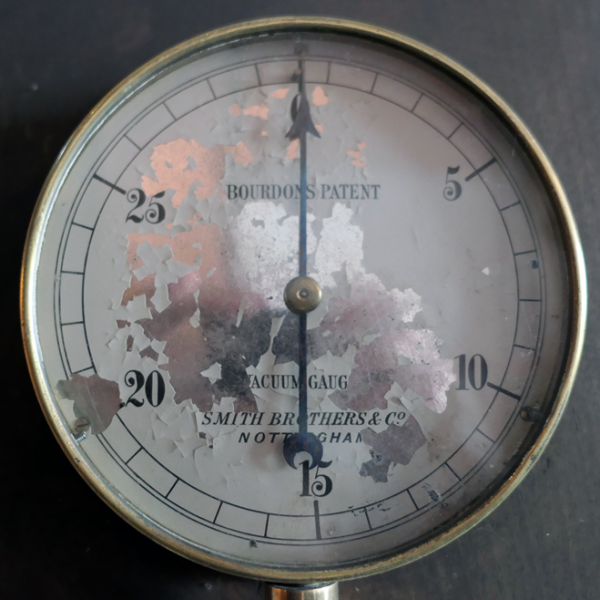
Pressure gauge for a 19th-century steam engine

Universities spend considerable time and money trying to measure research influence, but do those metrics truly capture scholarly value? I talked with Rachel Miles, research impact coordinator at Virginia Tech Libraries, to find out …

Using genAI for the literature review

Reading Time: 4 minutes
A heap of books
photo by Claudia Wolff on Unsplash

Is there any point in doing a literature review now that genAI can do it for you? That’s the timely question raised in a recent article in LSE Impact (“Why write a literature review if …

Andrew Smeall: using technology to effect business change

Reading Time: 2 minutes

Adaptability and innovation are words that spring to mind with Andrew Smeall. From studying Chinese in Beijing, he was involved in setting up journal production systems at Hindawi and Wiley, before his present tole, as VP of Product Innovation at Sage. …

An interview with Brian Nosek, Center for Open Science

Reading Time: 3 minutes

The Center for Open Science, co-founded by Brian Nosek, has been responsible for many of the big innovations in science practice over the last ten years, including the Open Science Framework and the Reproducibility Project. In this interview I talked …

SciELO: a model for Open Science?

Reading Time: 2 minutes

Anyone with an interest in Open Science and the role of repositories will find the ATG interview with Abel Packer, co-founder of SciELO, fascinating. SciELO is both a national provider of publishing services for journals, and an aggregator of content, active …

Page 1 of 14

Powered by WordPress & Theme by Anders Norén