
Two of the oldest myths about reading are:
…

I expected great things from this book, published in the Charleston Briefings series. Digital scholarship has been around for enough time to assess how things have changed since the era of print; Google Scholar has existed since 2004, which means over …

The traditional measure of academic significance, invented way back in the 1960s, is the citation index. If a paper is cited, then it has significance for other researchers. If we count the …

The Web is full of ideas for self-improvement: how to be more efficient, more productive, more successful. One tip for reading more effectively is to read only short books (I’m not joking – there is a website that tells you which …

An excellent post from Adam Hyde (February 2022) pointed out one of the limitations of the request-for-proposal (RFP) process, used when a purchaser wishes buy a large-scale software solution.
As Hyde points out, one obvious …
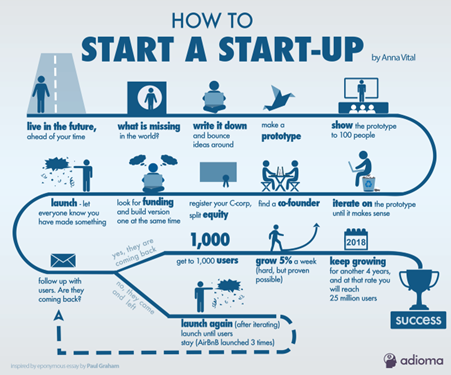
Creating a startup looks so simple; an infographic can summarise it in a few steps. So why aren’t startups more successful in academic publishing?
This is a topic big enough for a whole book, but …

You couldn’t quibble with that title – at least, that’s what I thought, until I was reading about Paper Digest, an …

Octopus is a new platform for scholarly research: somewhat like a preprint server, with instant publication, but Instead of a full article, a researcher posts just a component of an article: a problem statement, …

Sounds unlikely, but that was the basis for a remarkable talk by Bob Kasenchak (co-authored by Ahren Lehnert) at an ISKO Meetup (14 June 2022). The talk began in uncompromising fashion with the cover of a famous work by French postmodernist …

This is the story of a tragedy: a step forward for the academic community that was resisted and then blocked. It’s difficult to imagine, but Along Came Google (Princeton, 2021) is as gripping as any thriller – except for the conclusion.…
Powered by WordPress & Theme by Anders Norén